

Writer’s block is the curse of all bloggers, luckily, when I suffer from this particular malady I am in the company of the esteemed poet laureate, Ted Hughes. Perhaps Ted Hughes's most striking example of writer's block occurred when he was a first-year undergraduate at Cambridge University. It was 3am and he was struggling to write his weekly essay. The page in front of him was blank and he fell asleep.
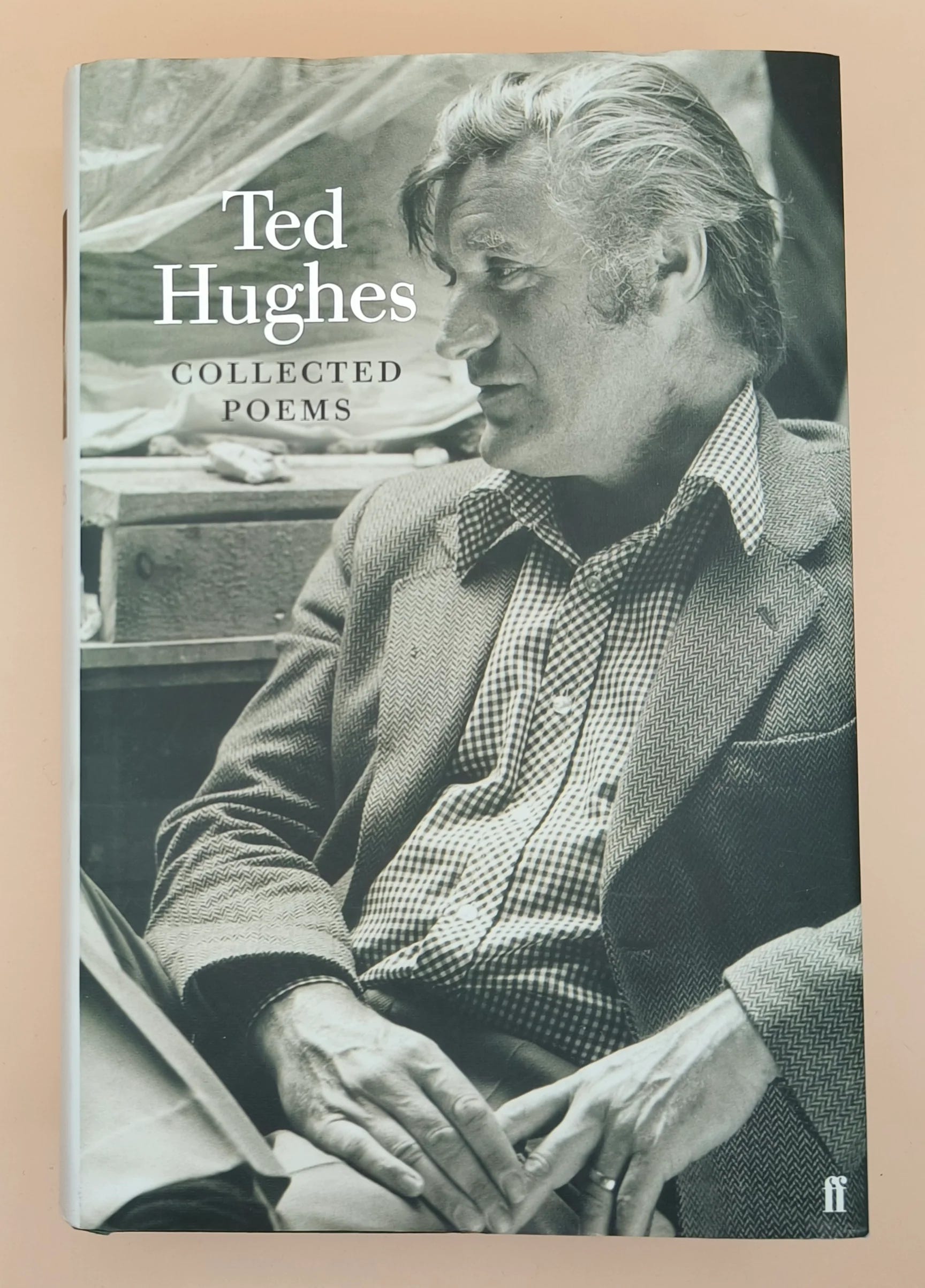
(All poetic references in this blog come from the shop’s copy of Ted Hughes’s collected poems.)
In the dream that followed ‘the door opened and round the side of the door came the head of the fox. He was a man, a small man, but he was a fox. He put up his hand on the page and as he put it down, he said: “you have to stop this you’re destroying us.”’ Following this dream, Hughes would go on to quit his English literature course and would spend the remainder of his time at university studying anthropology. To see Ted Hughes tell this incident in his own words, I would very much recommend the BBC documentary ‘Ted Hughes: Stronger Than Death’, which you can watch for free on YouTube.
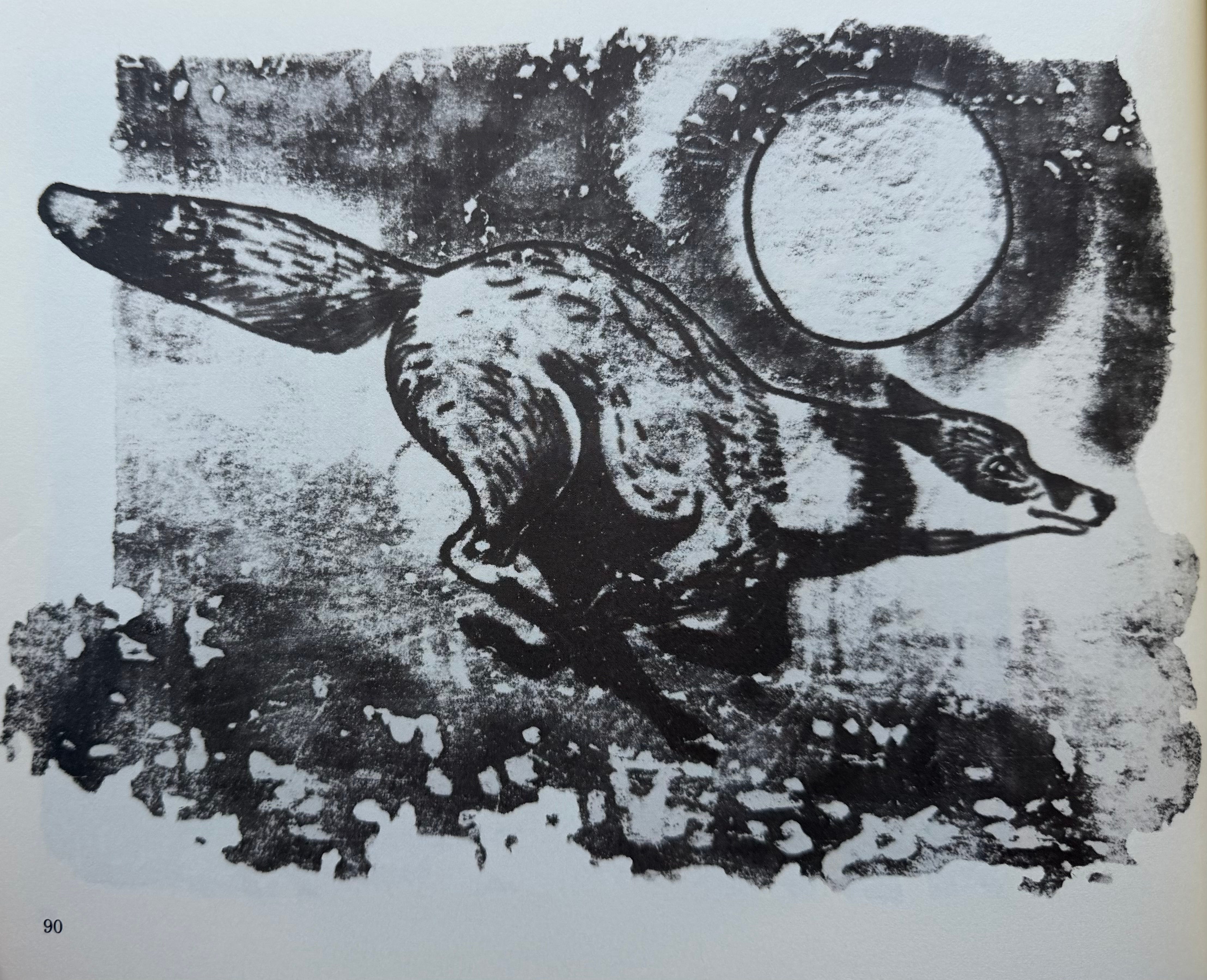
(An illustration by R.S. Lloyd from ‘What is the truth’ by Ted Hughes, which recently came in from a local seller.)
Hughes subsequently memorialised this incident in his poem ‘The Thought Fox’:
‘Till, with a sudden sharp hot stink of fox
It enters the dark hole of the head.
The window is starless still; the clock ticks,
The page is printed.’
What is striking about this particular incident is that for Hughes the poem and the animal are so tightly interlinked that they become all but indistinguishable. Hughes would go on to spell this out for literary critics later in his career when he wrote his 2008 essay ‘Capturing Animals’:
‘In a way, I suppose, I think of poems as a sort of animal. They have their own life, like animals by which I mean that they seem quite separate from any person, even their author, and nothing can be added to them or taken away without maiming and perhaps even killing them.’
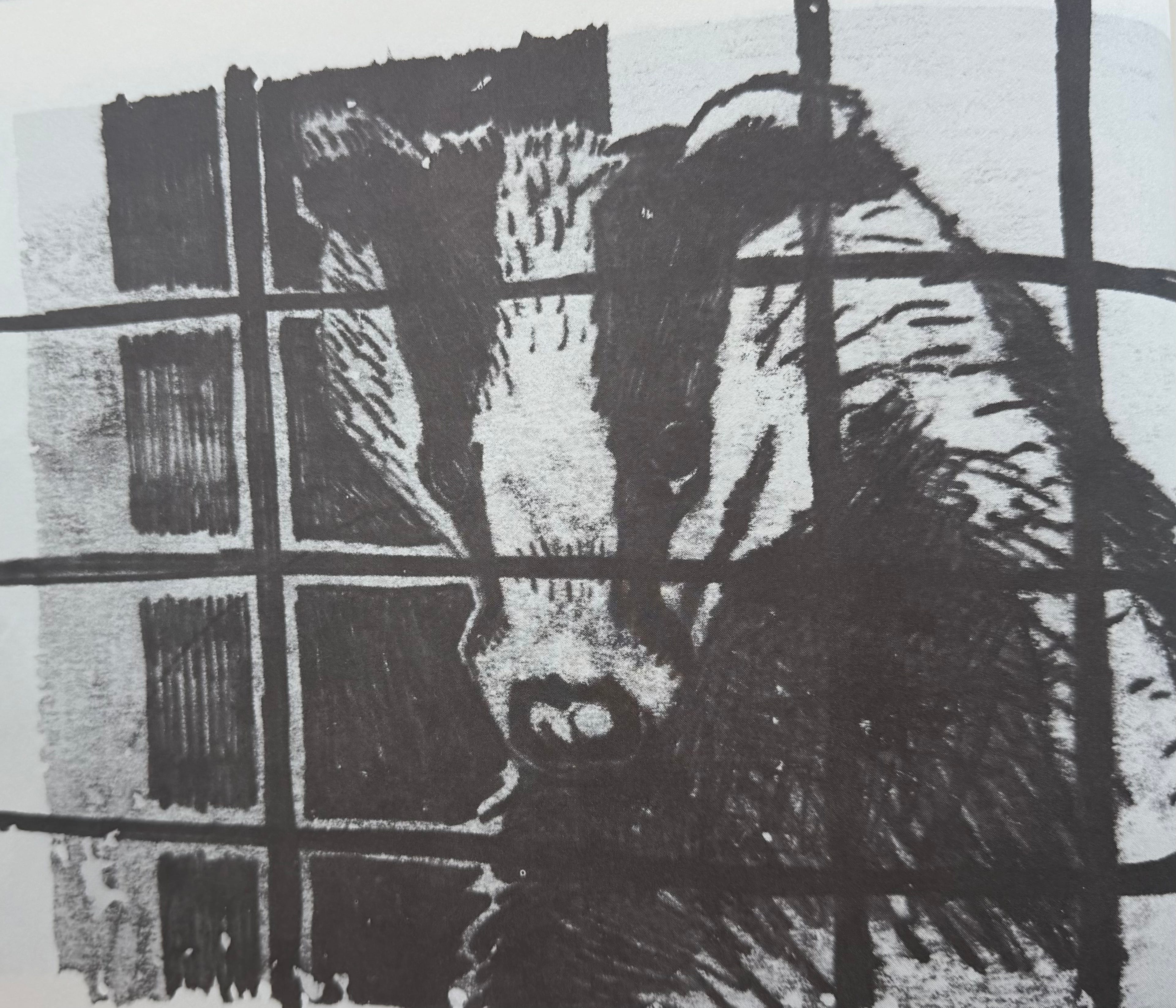
(An illustration by R.S. Lloyd from ‘What is the truth’ by Ted Hughes, which shows a captured badger.)
The zenith of this idea comes to fruition in his later collection ‘Crow’, which he wrote in the wake of the suicide of his wife, Sylvia Plath.
‘Creation quaked voices –
It was a cortege
Of mourning and lament
Crow could hear and he looked around fitfully.’
Altogether, Hughes’s concept of the poem as animal begs the question of whether his poetry can fit in a world where biodiversity is on the decline.
I had a recent conversation with a Professor of English Literature at Cambridge, who commented that the hardest thing about teaching Shakespeare to her undergraduate students was not the language, or the complex social structures of the time period, both of which they were capable of understanding, but instead getting her students to comprehend the natural environment that the plays operate in. How many undergraduates really know what a hoarse raven sounds like, when it croaks the fatal entrance of Duncan under lady Macbeth’s battlements?
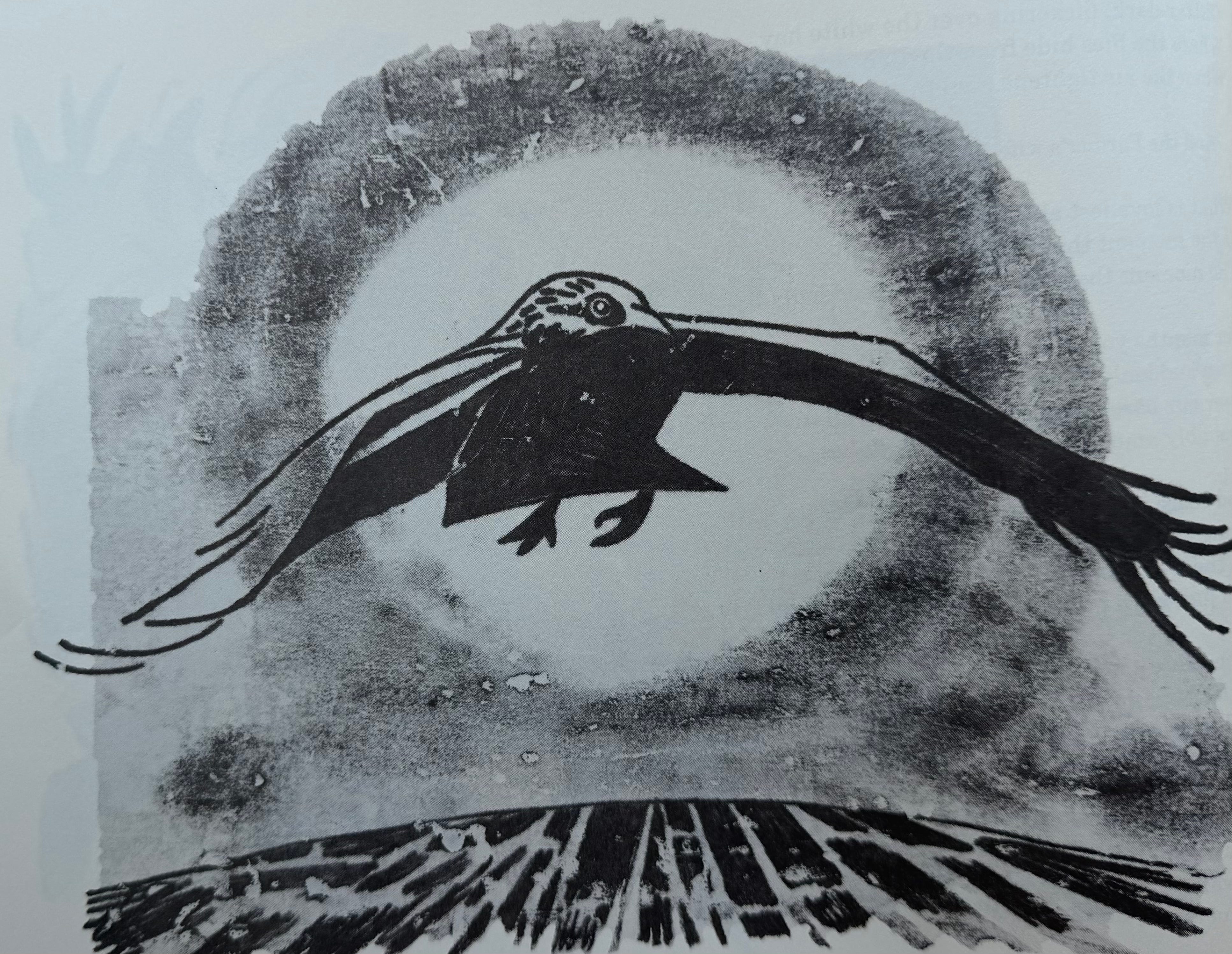
(Another illustration by R.S. Lloyd from ‘What is the truth’ by Ted Hughes.)
However, Shakespeare aside, I had a lot of fun recently when I attended a very inspiring writing course, located in Ted Hughes’s old house in Hebden Bridge. Surrounded by the stunning natural landscape, and somewhat alarmingly by a sense of the poet himself, it is needless to say that my typical case of writer’s block was banished. What I noticed more than anything was the animal life that still surrounded Hughes’s home.
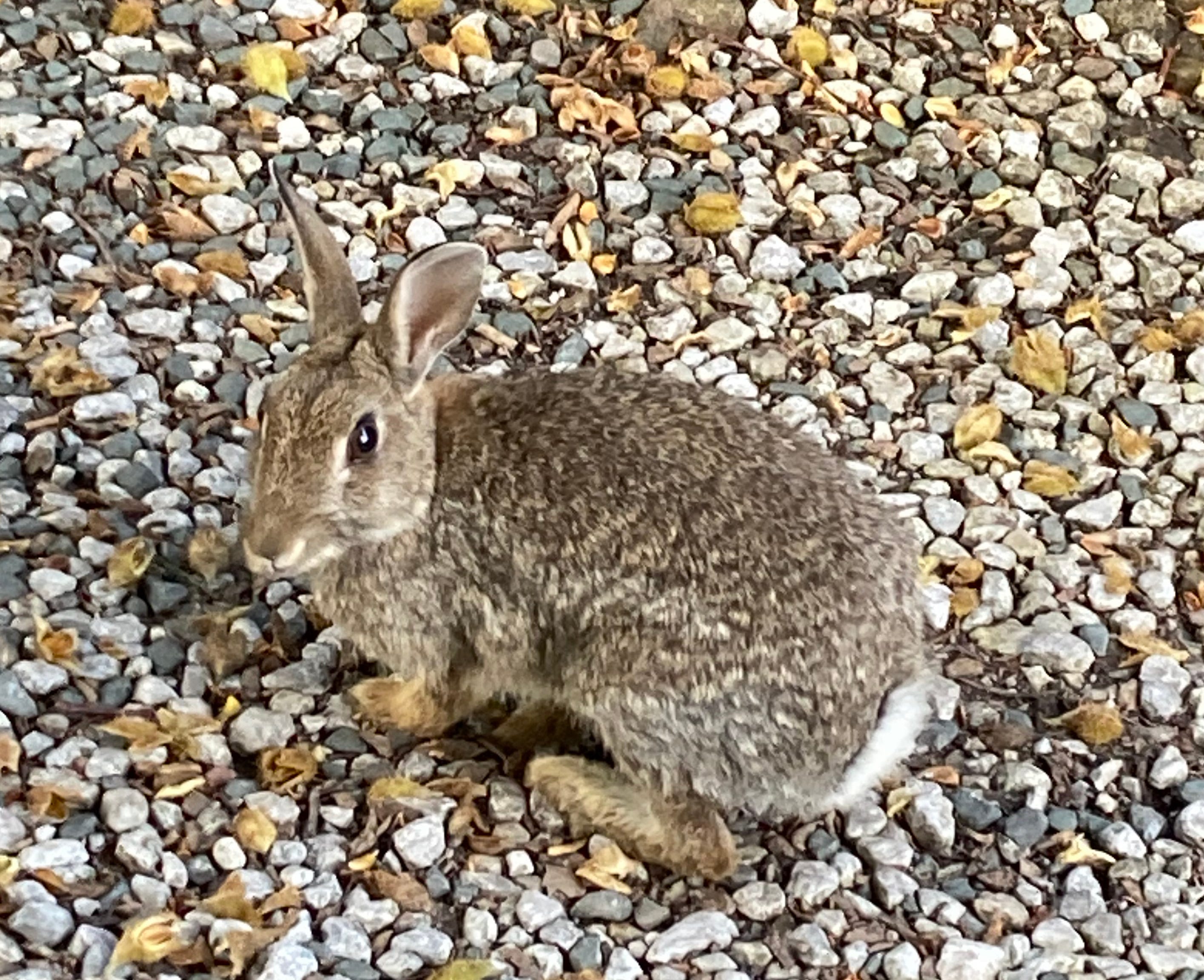

(Some photos from my walk around Hughes’s house in Yorkshire.)
Furthermore, Hughes’s animal poems have gone on to be a touchstone for many of our modern classics. In particular, the recent writing of Max Porter, whose book ‘Shy’ has been adapted for Netflix. Porter’s first book ‘Grief is a Thing with Feathers’, brings the character from Ted Hughes’s ‘Crow’ to life. Crow operates as a kind of nanny for two bereaved children and their father, as they work through their grief. Ted Hughes himself even has a cameo in this novel. What ‘Grief is the Thing with Feathers’ shows is the allegorical power of animal imagery, even in a world where our day-to-day interactions with animals are limited.
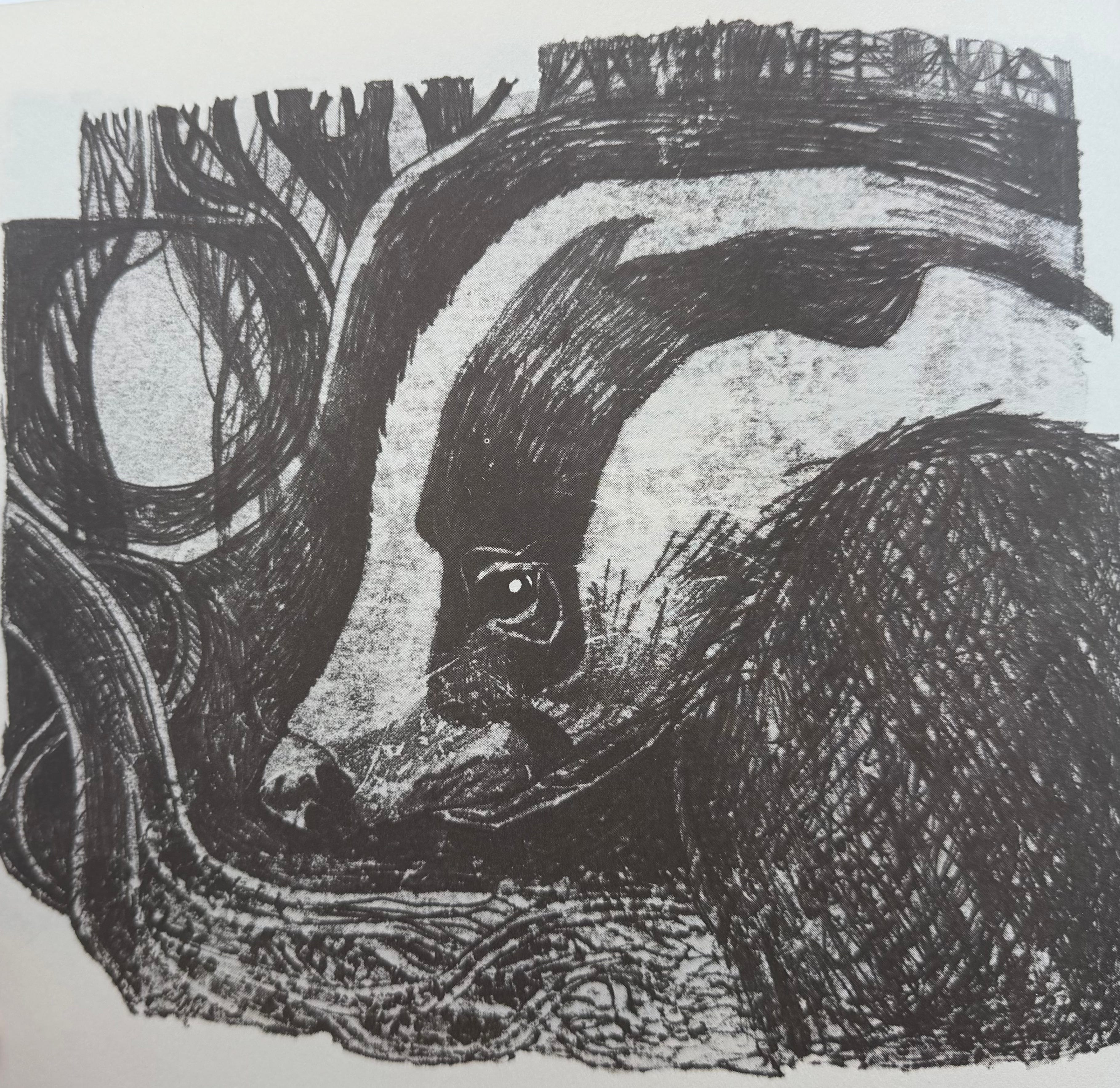
(The captive badger goes free! Illustration by R.S. Lloyd from ‘What is the truth’ by Ted Hughes.)