

Now that the days are getting darker and the rain is starting to fall, I am reminded of my brother’s lovely American girlfriend, who never fails to celebrate spooky season! In October, we bring to mind all sorts of ghouls and monsters, but one often slips through the net, and that is the goblin.
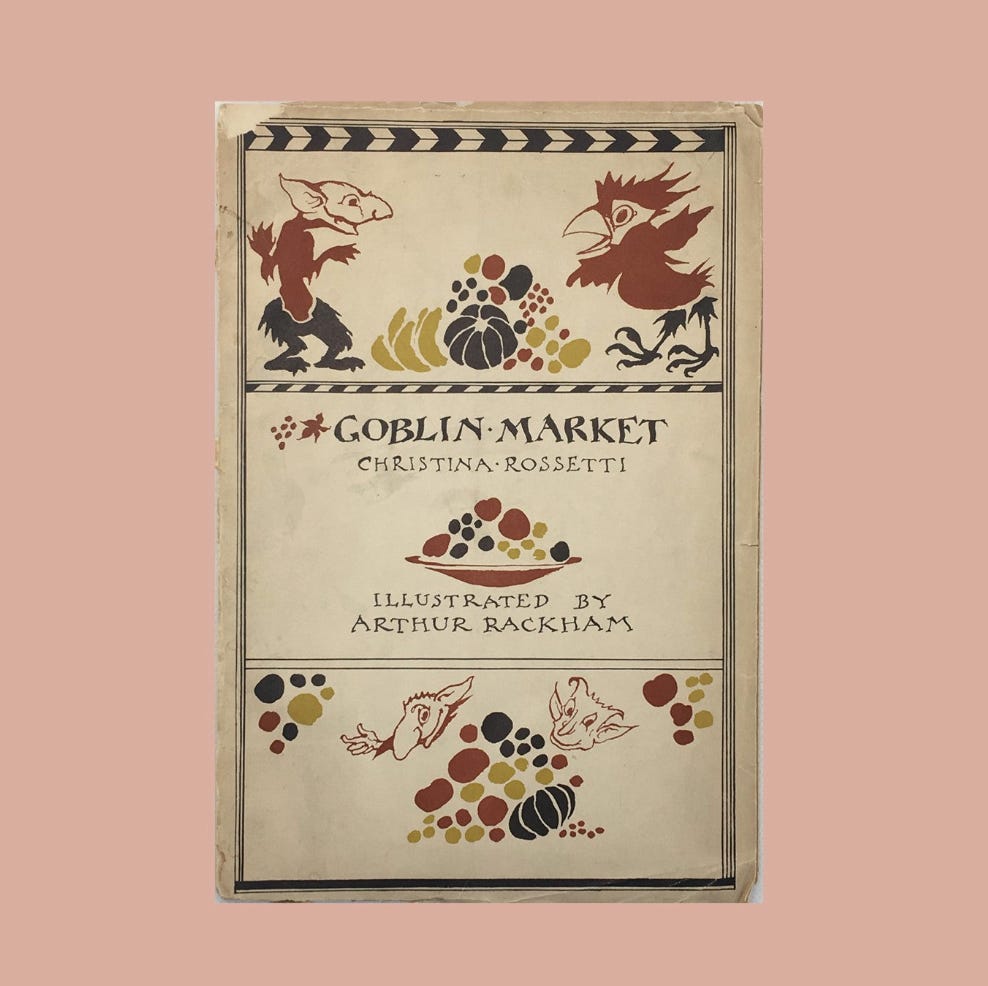
(The front cover of Christina Rossetti’s ‘Goblin Market’, illustrated by Arthur Rackham and available in the book shop.)
This was not the case in the nineteenth century, where the goblin became the subject of the attention of two of the world’s most famous poets, both of whom tackled these little horned creatures. That is of course, Emily Dickinson and Christina Rossetti.
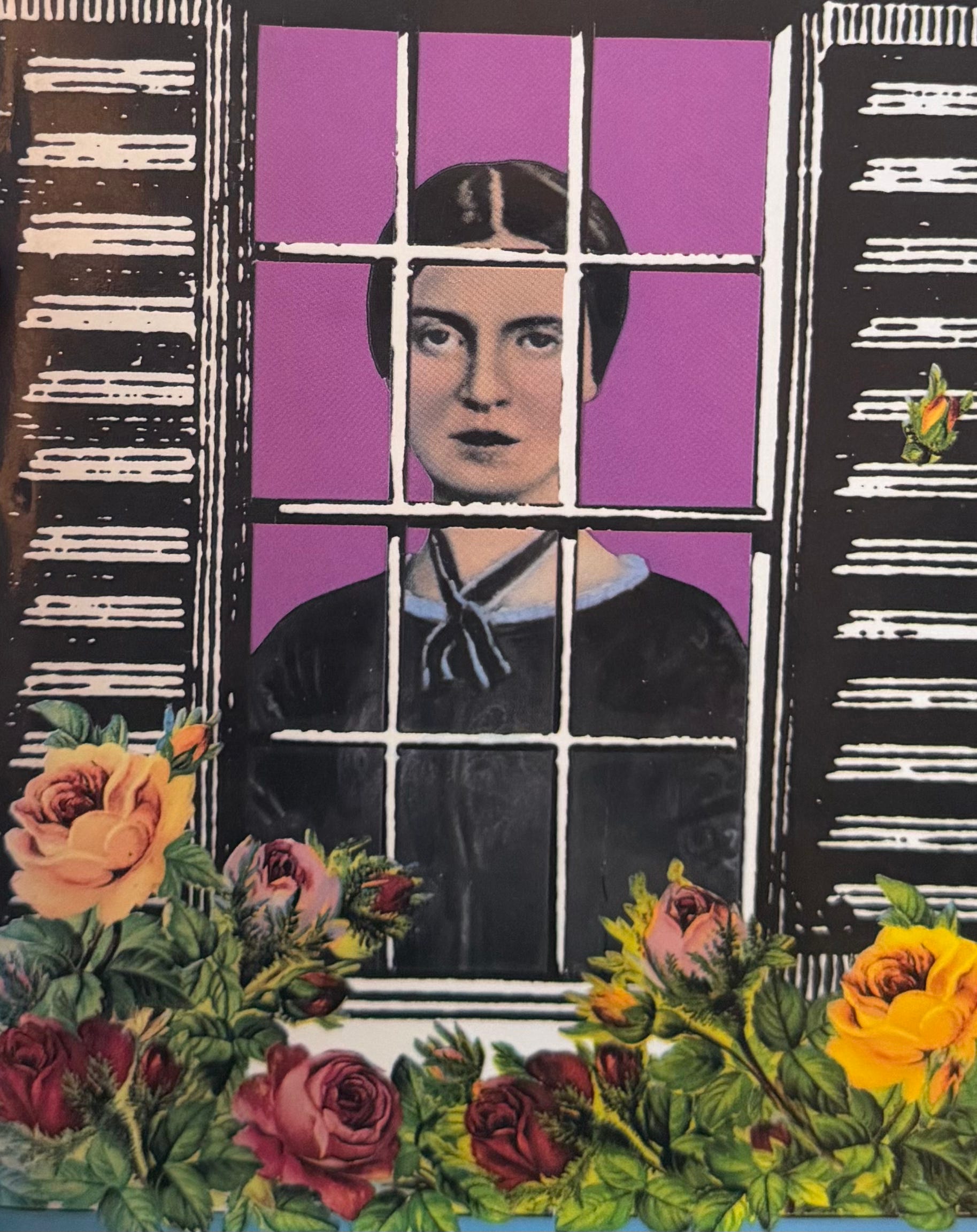
(Emily Dickinson peeps out her front window on the cover of ‘Emily Dickinson: Modern Critical Views’, edited by Harold Bloom and available in the shop.)
Now the goblin is not the only thing that these two poets had in common. Both were noticeably introverted. Both wrote in their bed chambers where they were secluded from the daily lives of their households. Both were extremely spiritual, using their poetry to tackle the philosophical and the divine. Finally, both were also born in the same stormy December, in the same year, fives days apart, on different sides of the Atlantic.
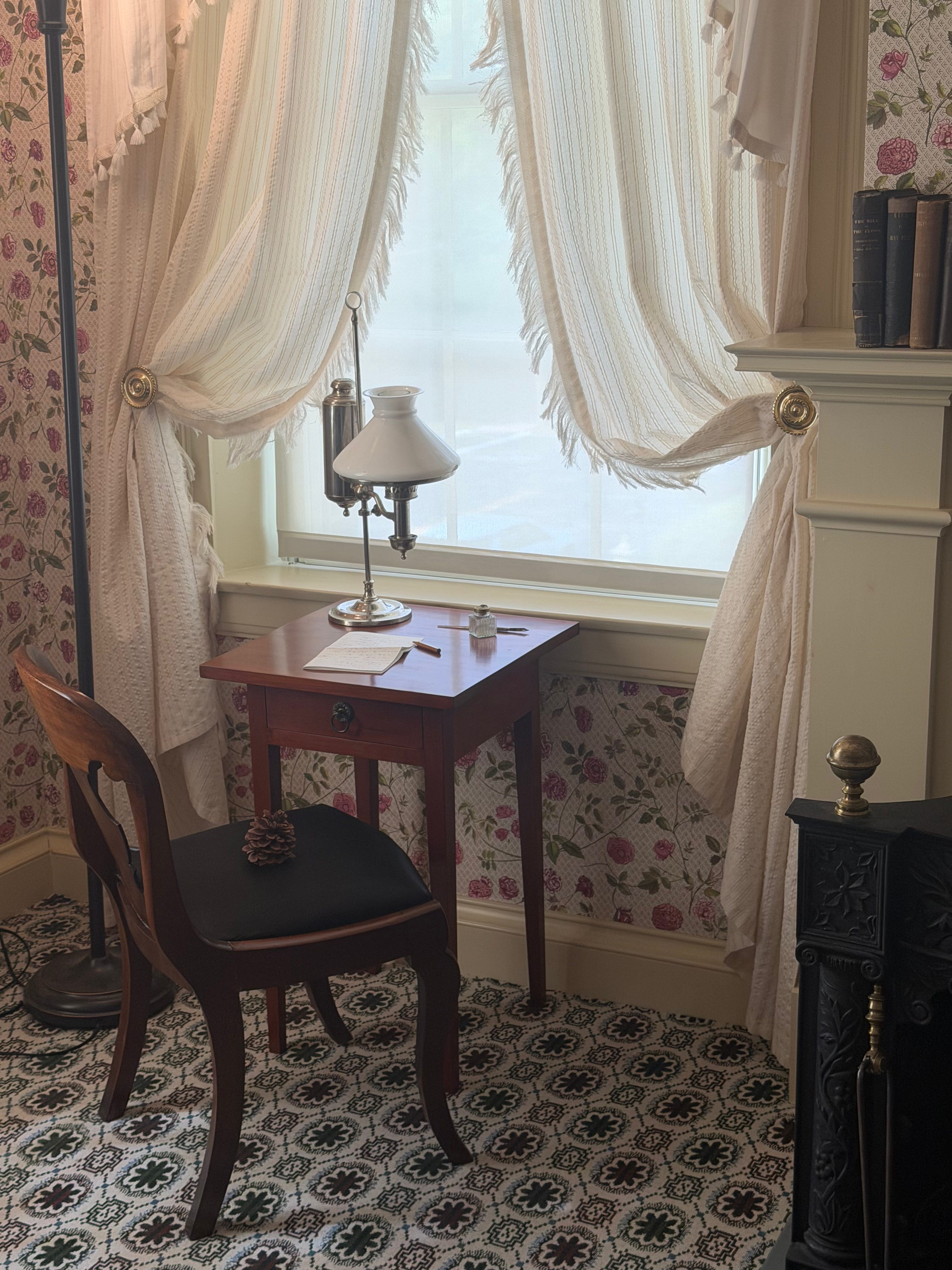
(Dickinson’s solitary writing desk in her bedroom in Amherst, which I was lucky enough to visit recently.)
In 1862, in spite of their geographical distance, both women would put pen to paper and tackle that most impish character of all, the goblin. Dickinson wrote:
‘The Soul has Bandaged moments -
When too appalled to stir -
She feels some ghastly Fright come up
And stop to look at her -
Salute her, with long fingers -
Caress her freezing hair -
Sip, Goblin, from the very lips
The Lover - hovered - o'er -
Unworthy, that a thought so mean
Accost a Theme - so - fair –’
For Rossetti, the goblin is (if possible) even more threatening:
‘Laugh’d every goblin
When they spied her peeping:
Came towards her hobbling,
Flying, running, leaping,
Puffing and blowing,
Chuckling, clapping, crowing,
Clucking and gobbling,
Mopping and mowing’
There are a series of clear links between the goblins of both poems. In both cases the goblins become stand ins for male lovers, and in both cases, they are linked to a voracity of appetite. In Dickinson’s poem, the goblin sips from the lips of the female narrator. In Rossetti’s poem, the fruits that the goblins feed their female victim lead her to an insatiable hunger:
'She suck’d and suck’d and suck’d the more
Fruits which that unknown orchard bore;
She suck’d until her lips were sore;
Then flung the emptied rinds away'
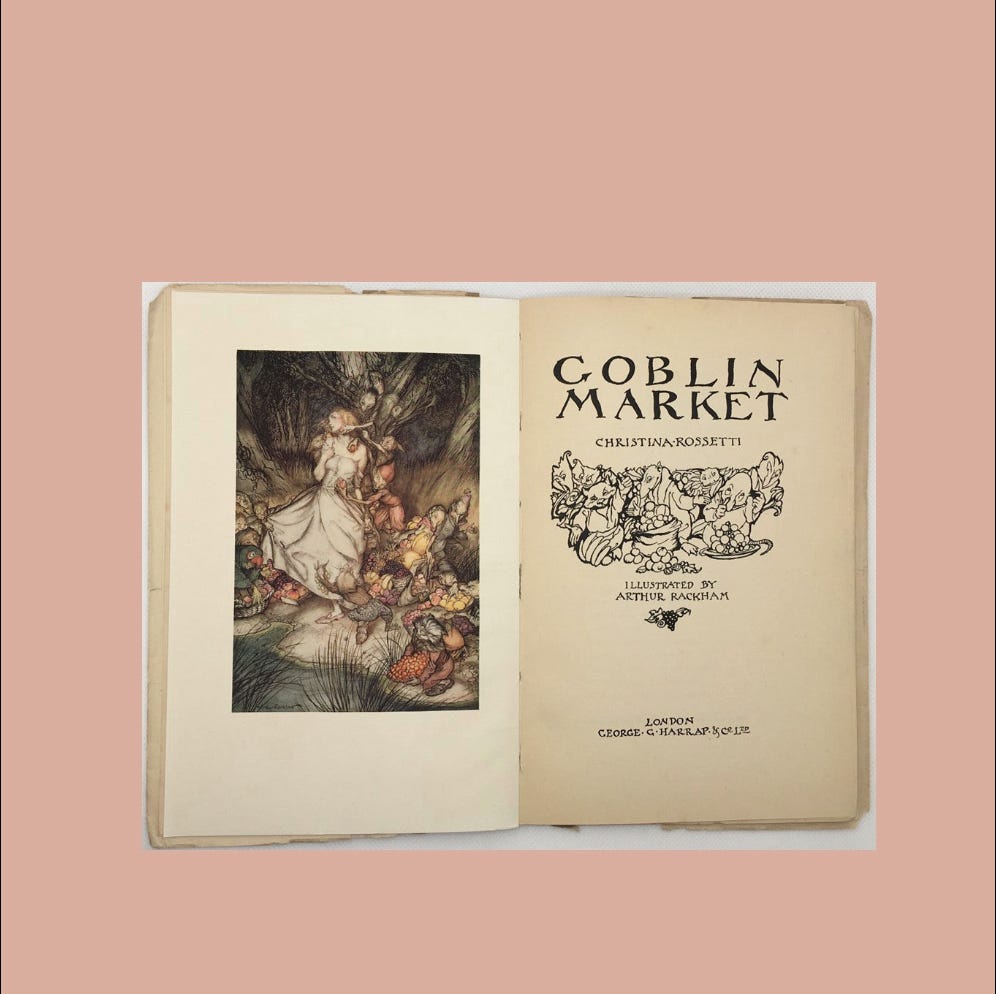
(Laura, the lead character of ‘Goblin Market’ gorges on delicious fruit.)
Naughty indeed! Finally, in both poems, it becomes clear that it is the soul that is at stake in these interactions between goblins and women.
‘Days, weeks, months, years
Afterwards,
[…]
Laura would call the little ones
And tell them of her early prime,
Those pleasant days long gone
Of not-returning time:
Would talk about the haunted glen,
The wicked, quaint fruit-merchant men,
Their fruits like honey to the throat
But poison in the blood;
(Men sell not such in any town):
Would tell them how her sister stood
In deadly peril to do her good,
And win the fiery antidote:
Then joining hands to little hands
Would bid them cling together,
“For there is no friend like a sister
In calm or stormy weather;
To cheer one on the tedious way,
To fetch one if one goes astray,
To lift one if one totters down,
To strengthen whilst one stands.”’
As for Dickinson, with her classic ambiguity, the rescue of the soul from the goblin of the poem is not complete:
‘The soul has moments of escape -
When bursting all the doors -
She dances like a Bomb, abroad,
And swings opon the Hours,’
So, what was in the water in 1862 that made the image of the goblin so appropriate for the discussion of these themes by these two poets?
The goblin would emerge more strongly into popular thought twenty years later, in 1880, with the publication of Wirt Sikes’s book all about goblins (for a full free copy click here). This timescale is more typical with the larger Victorian folk revival, which became more widespread later in the nineteenth century. However, at the point when these poems were written, the goblin was still a lesser creature in the pantheon of folkloric nasties. The chances of both poets hitting upon this image were actually relatively small.
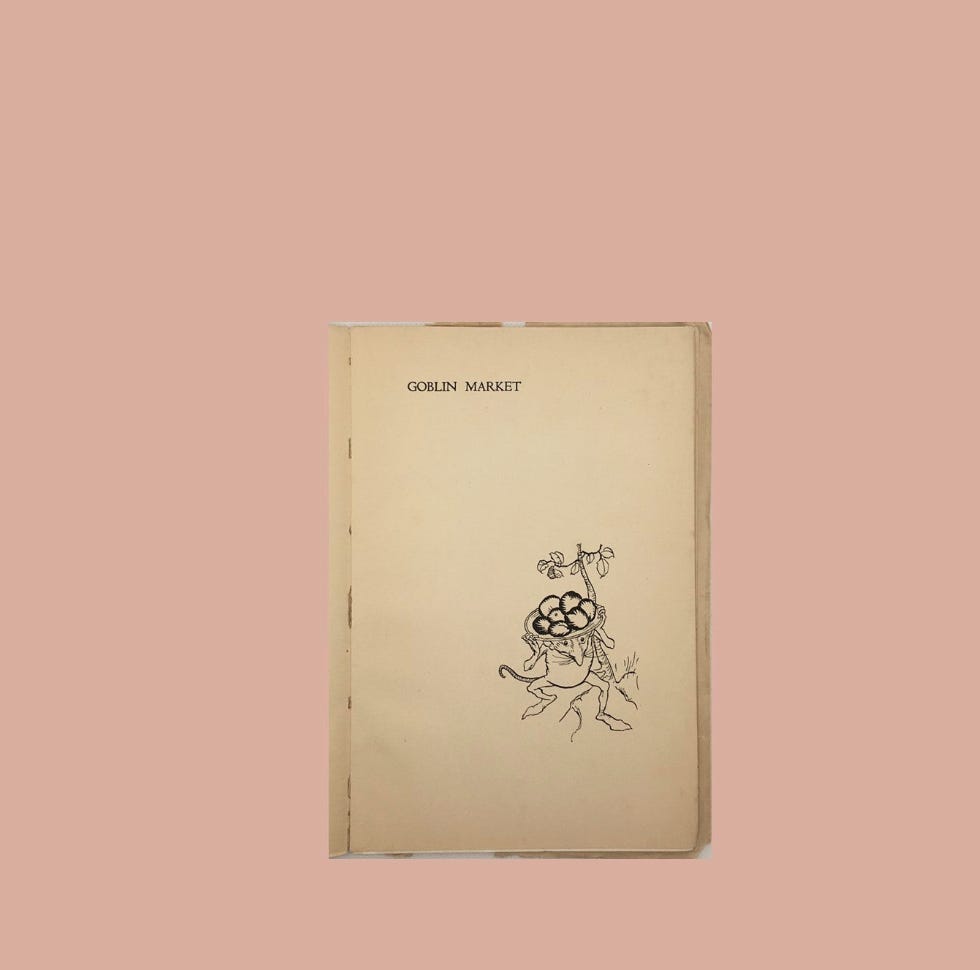
(A naughty goblin adorns the front page of Christina Rossetti’s ‘Goblin Market’.)
Here, we branch into theory. However, it is possible that a copy of Rossetti’s poem may have made its way into Dickinson’s hands during the year of 1862. Dickinson’s sister-in-law Susan, with whom she had a very strong friendship, was known to have been on the American literary scene during the 1860s. Susan frequently entertained guests such as Ralph Waldo Emerson and was used to discussing avant-garde reading matter. Rossetti’s poems were published during her life (unlike Dickinson’s) and were widely read. Perhaps therefore we can see between these two poets then, not only a mirroring in their lives across the ocean, but also a conversation.
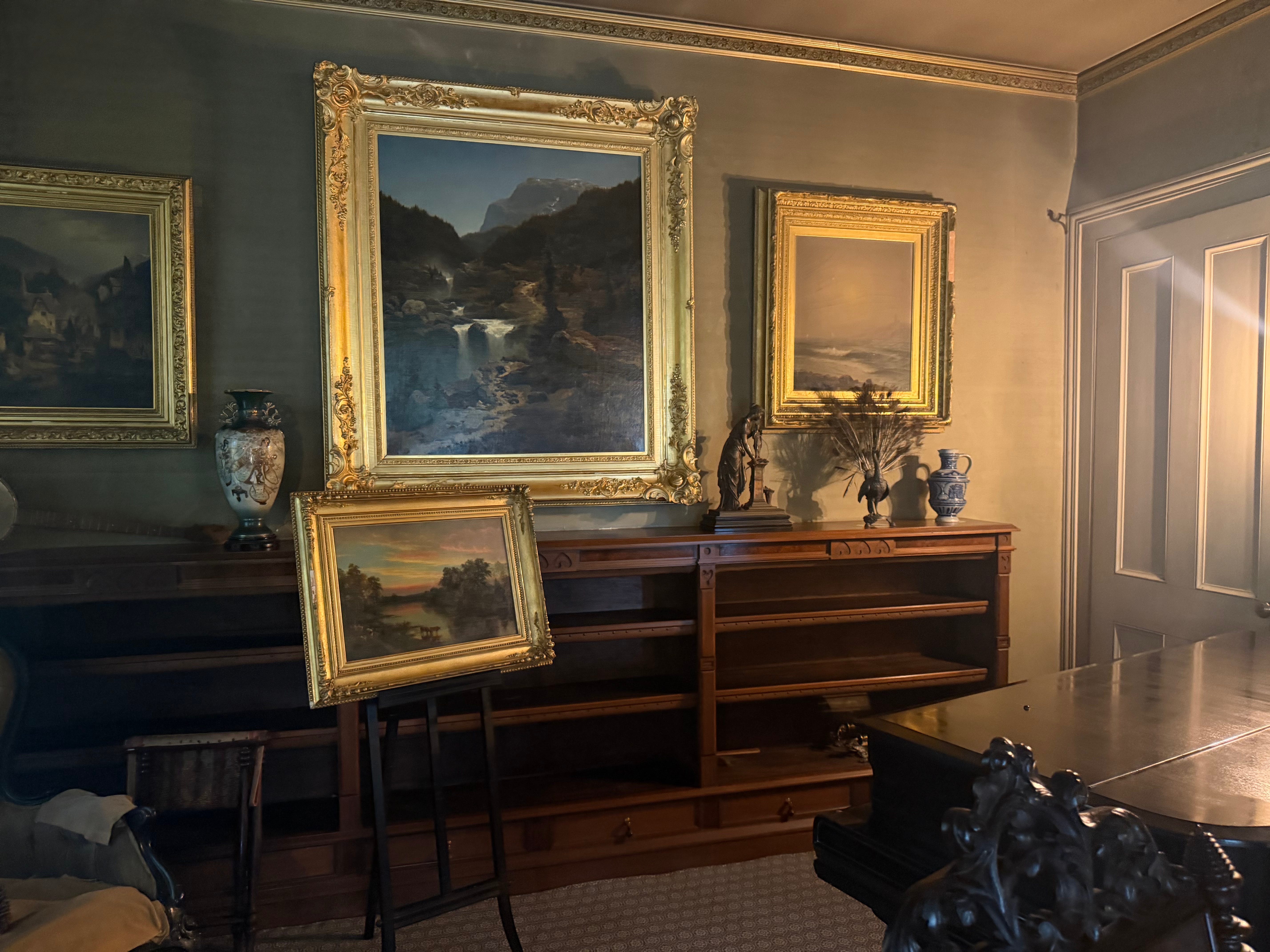
(Susan’s entertaining space in her house in Amherst, where she hosted many famous literary figures.)